Skip to content

Preformed multi-crease roll

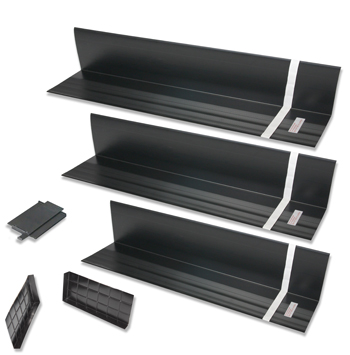
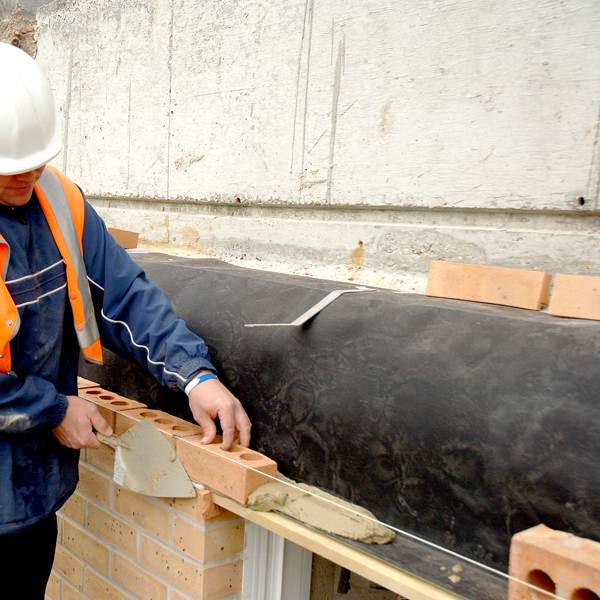
A robust, damage resistant cavity tray “on a roll” which utilises factory applied continuous creases to enable the tray to folded to suit a variety of applications. Unlike other flexible roll form cavity trays, Glidevale MCR multi-crease roll has the added benefit of being self supporting in the cavity.

Features & Benefits

  • Ideal for use at ground level as a continuous cavity tray or in parapet applications.
  • Can be used over proprietary lintels.
  • Can be folded to form a continuous cavity barrier for ground gas protection strategies
  • 25m roll reduces on site jointing.
  • 0.75 or 1.0m thick resists accidental damage on site.
  • Full range of pre-formed, factory fabricated corners steps and stop ends available.
Downloads

Frequently Asked Questions

Where are stepped cavity trays used?

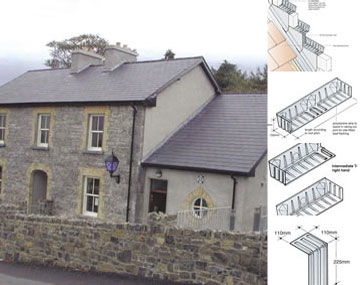
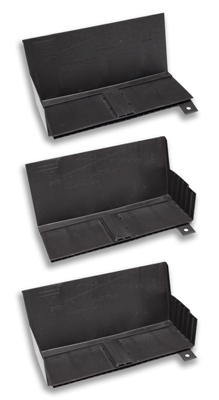
A. A stepped cavity tray is used where a sloping roof abuts an external wall. Below the roof line the external leaf of brick or blockwork becomes an internal wall. They are also required where the cavity wall is bridged, e.g. by a lintel or ducting.

Why are cavity trays required?

A. Brick and block are porous materials; therefore, water often penetrates through the outer leaf of the external wall into the cavity space and trickles down the internal face of the inner leaf. It is therefore necessary to prevent this moisture from entering the building by using a cavity tray to catch the moisture. NHBC Standards for ‘External masonry walls’ section 6.1-D6 (a) and BS 8215 ‘Design and installation of damp proof courses in masonry construction’ specifically recommend the use of preformed abutment cavity trays.

How does the cavity tray disperse the water?

A. Unlike other manufacturer’s cavity trays that require the fitting of weeps to the bottom catchment tray, all Glidevale brickwork trays have an integral bed weep allowing water to safely drain to the outer face of the external wall at each stepped tray. The Glidevale cavity tray range has been appraised under BS EN 9001, giving an independently audited and monitored assurance that the products are designed to meet their intended purpose.

How do I fit lead to an unleaded tray following installation?

A. Glidevale brickwork trays have a unique fleximouth mortar barrier on the lower leading edge of the tray which is kept attached during installation. Once installed and the mortar has set, pull the protruding tab out. This will leave enough room to fit the lead flashing without the need to rake out the joint. We advise to also seal with mastic.

I have a 150mm cavity, will the cavity trays be suitable as they will not reach the inner leaf?

A. A self-supporting cavity tray, such as Glidevale’s, must cover half of the open cavity. Typically, a 150mm cavity would have 50mm of insulation fitted to the inner leaf of the cavity, once this is fitted Glidevale cavity trays would be covering the required depth.

Should I use long or short lead flashing? Which thickness of lead would I need?

A. The length of lead flashing is dependent on the roof covering and pitch. When using a profiled tile then long lead is advised, conversely if using a flat tile or slate covering then short lead would be best. Glidevale cavity trays are supplied with code 4 lead as standard, other thicknesses are available by request. Trays are also available with factory-fitted Protect AluFlash flashing; a lightweight, aluminium based alternative to lead.

View All FAQs »

Have a question?

For any questions or queries about our product ranges and the technical support services we can offer, please contact us using the form below.